
The Perfect Pantry: A Professional Organiser's Guide to Kitchen Storage and Organisation
As a Professional Organiser, I know that a well-organised pantry can transform your daily routine and reduce food waste. Here's how to create a pantry that works as hard as you do.
Jo de Serrano OBE DUniv
4 min read
Last updated: October 2025
I have looked inside a lot of pantries and kitchen cupboards over the years. More than I can count. And the most common thing I find is not chaos, exactly; it's a system that made sense once, or was started with good intentions, and then gradually stopped working as life got in the way.
The 10-year-old spice that has never been opened. The pasta in four different bags at different stages of fullness. The tin of chickpeas at the back that you keep buying again because you can't see the one you already have. The shelf where things go when there's no other logical home for them, and they stay there for years.
Sound familiar? Good. Because it means you're normal, and also because all of it is fixable.
Why Most Pantry Organisation Fails
The problem with most pantry organisation advice, and there is a lot of it on the internet, with its matching containers and colour-coded labels, is that it shows you the end result without explaining how to get there, or more importantly, how to maintain it once real life resumes.
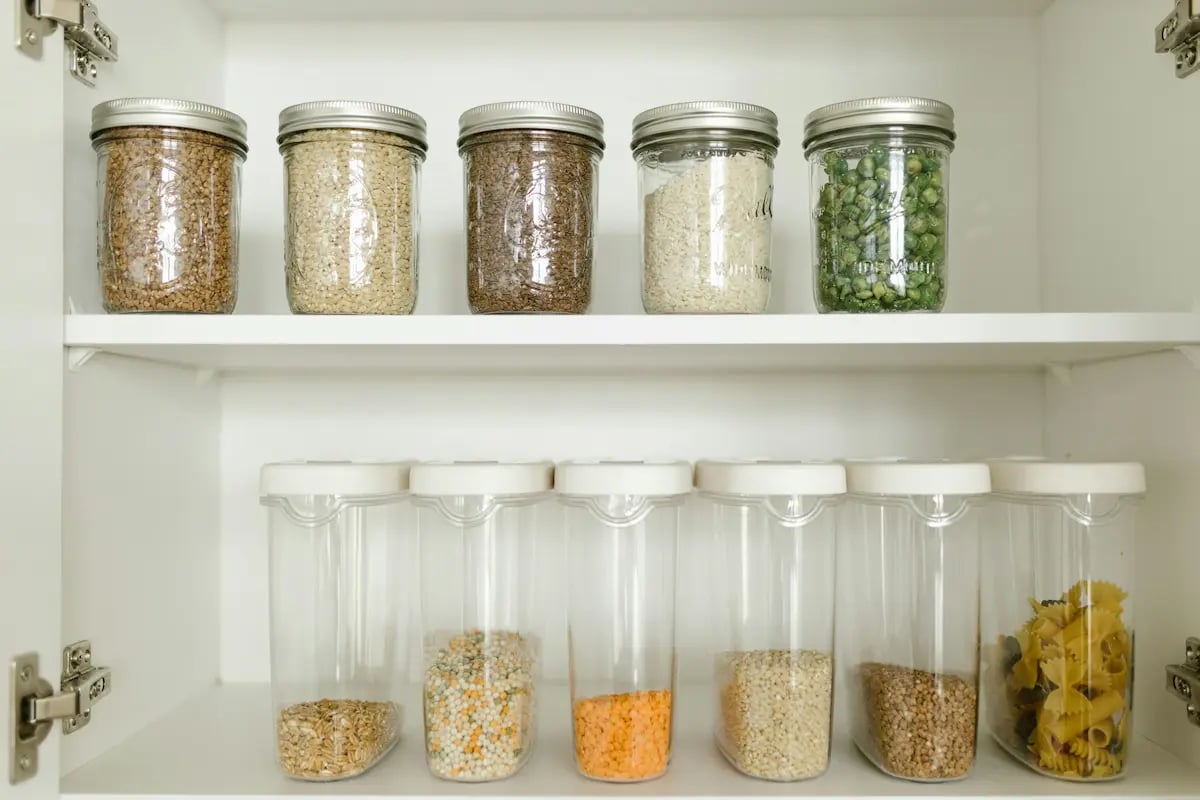
A beautiful pantry with identical glass jars is aspirational - just like the blog photo. It is also high-maintenance. Every time you do a supermarket shop, you have to decant everything. Every time you buy the wrong size bag of something, nothing fits, and where do you put the flour, rice, pasta that doesn't fit in the jar? The system breaks down, the guilt sets in, and you're back where you started.
What works is a system built around how you actually shop, cook, and live, not around how someone's pantry looks on Instagram.
Start With a Clear-Out, Not a Shop
Before you buy a single container or label, take everything out. Everything. Put it on the kitchen table or the floor where you can see it all at once.
Now do three things:
First, check dates. Anything genuinely out of date goes. Not the "best before" dates on dried goods — those are quality indicators, not safety indicators, and most dried pasta and rice are fine for years beyond the date. But anything clearly past it, or anything you can't identify, goes.
Second, consolidate. Two half-bags of the same pasta: one bag. Three jars of the same spice: one jar (or two if you genuinely use that much). Consolidating before you reorganise is the step most people skip, and it makes more space than any organiser will.
Third, be honest about what you actually cook. The coconut flour from a recipe you tried once in 2022 and never made again. The quinoa you bought with good intentions. These can go. Your pantry should reflect what you actually eat, not what you intend to eat.
The System That Actually Works
Frequency first. The things you use every day, cooking oil, salt, the pasta, the rice, the stock cubes — should be at eye level and within arm's reach. The things you use occasionally go on higher or lower shelves. The things you use rarely go to the back or the top. This sounds obvious, but most pantries are organised by category rather than frequency, which means you're reaching past the baking powder you use twice a year to get to the olive oil you use every day.
See-through wherever possible. Clear containers are genuinely useful, not because they look nice, but because you can see what you have. The single most effective thing you can do to reduce food waste and unnecessary repurchasing is to be able to see your stock at a glance. You don't need matching jars from a lifestyle brand. Decent clip-top containers from a supermarket do exactly the same job.
One in, one out for duplicates. Before anything new comes into the pantry from a supermarket shop, it goes behind whatever you already have. Newer items at the back, older at the front. New pasta goes under the existing pasta, so the oldest is always used first. New tins go behind existing tins. This is the "first in, first out" principle; it's used in professional catering for good reason, and it works just as well in a home kitchen.
A "use first" box. Keep a small basket or box on an accessible shelf for items that are nearly out of date or need to be used soon. When you're planning meals or doing a supermarket shop, check the box first. This single habit reduces food waste significantly.
Label what needs labelling. Not everything needs a label. Your olive oil doesn't need a label. But decanted dry goods, particularly if they look similar, do. I've got some panko breadcrumbs in my cupboard and some desiccated coconut, and I would struggle to tell them apart without the label. Ditto for the cornflour and icing sugar. You don't need a label maker and a laminator. A strip of masking tape and a marker is entirely sufficient.
Maintenance is Simpler Than You Think
A well-organised pantry doesn't need a weekly overhaul. It needs two things: everything to have a home, and everything to go back to its home after use. That's the whole system.
A quick wipe-down monthly, and a proper check of dates and stock every three months, is all the maintenance a functional pantry requires. The goal is not a perfect pantry. The goal is a pantry that works, one where you can find what you need, where you don't buy things you already have, and where cooking feels manageable rather than like an archaeology project.
If your kitchen is the room you've been putting off, it's often one of the most satisfying to sort. Clients regularly tell me that an organised kitchen changes how they feel about cooking and about their home more broadly. I believe them, because I've seen it happen.
[Book a free 15-minute discovery call → just a 15-minute chat to find out more about your pantry pickle.
Order from Chaos
Direct Approach. Bespoke Solutions.
© 2026. All rights reserved.








Based in Croydon, serving London, the Home Counties, and South East England, with virtual services available worldwide. See Areas I Cover
Blog
APDO Member / Enhanced DBS / Fully Insured / ICO Registered: ZB705394
Registered Address: 71-75 Shelton Street, WC2H 9JQ Company Number: 14974139
Order from Chaos is founded by Jo de Serrano OBE DUniv, APDO member, Enhanced DBS cleared, and fully insured. Late-diagnosed AuDHD with 25+ years of professional experience bringing structured, practical thinking to the chaos of everyday home life

