
Why ADHD Brains Struggle with Decluttering (And What Actually Helps)
ADHD makes decluttering harder than it looks. Here is why conventional advice fails, and what actually works for ADHD brains, from an organiser who gets it.
Jo de Serrano OBE DUniv
5 min read
Last updated: March 2026
Key Takeaways
The difficulty is not laziness or lack of effort. Executive dysfunction affects the ability to start, sequence, and complete tasks, and decluttering involves all three simultaneously.
Out of sight genuinely means out of mind for many ADHD brains. Systems that rely on things being put away and remembered do not work. Visible storage is not aesthetically inferior — it is functionally appropriate.
Body doubling- having another person present whilst you work is an evidence-informed strategy, not a crutch. The presence of another person provides external regulation that makes task completion significantly more achievable.
ADHD affects an estimated 2.5 million people in England, the majority undiagnosed. If decluttering has always felt disproportionately hard, there may be a reason for that.
The system needs to work with your brain, not against it. Generic organising methods were not designed with ADHD in mind — bespoke systems are not a luxury; they are the point.
You've read the books, you've watched the shows, and you've started the process approximately seven times. And yet somehow the pile is still there, possibly larger than before, inducing more guilt.
NHS England estimates that around 2.5 million people in England have ADHD, the majority undiagnosed. If you are one of those who have ADHD, struggling with decluttering isn't a character flaw. It's a predictable consequence of how your brain is wired, and most decluttering advice is designed for brains wired completely differently.
Here's what's actually going on, and what genuinely helps.
The ADHD Brain and Decluttering: What's Really Happening
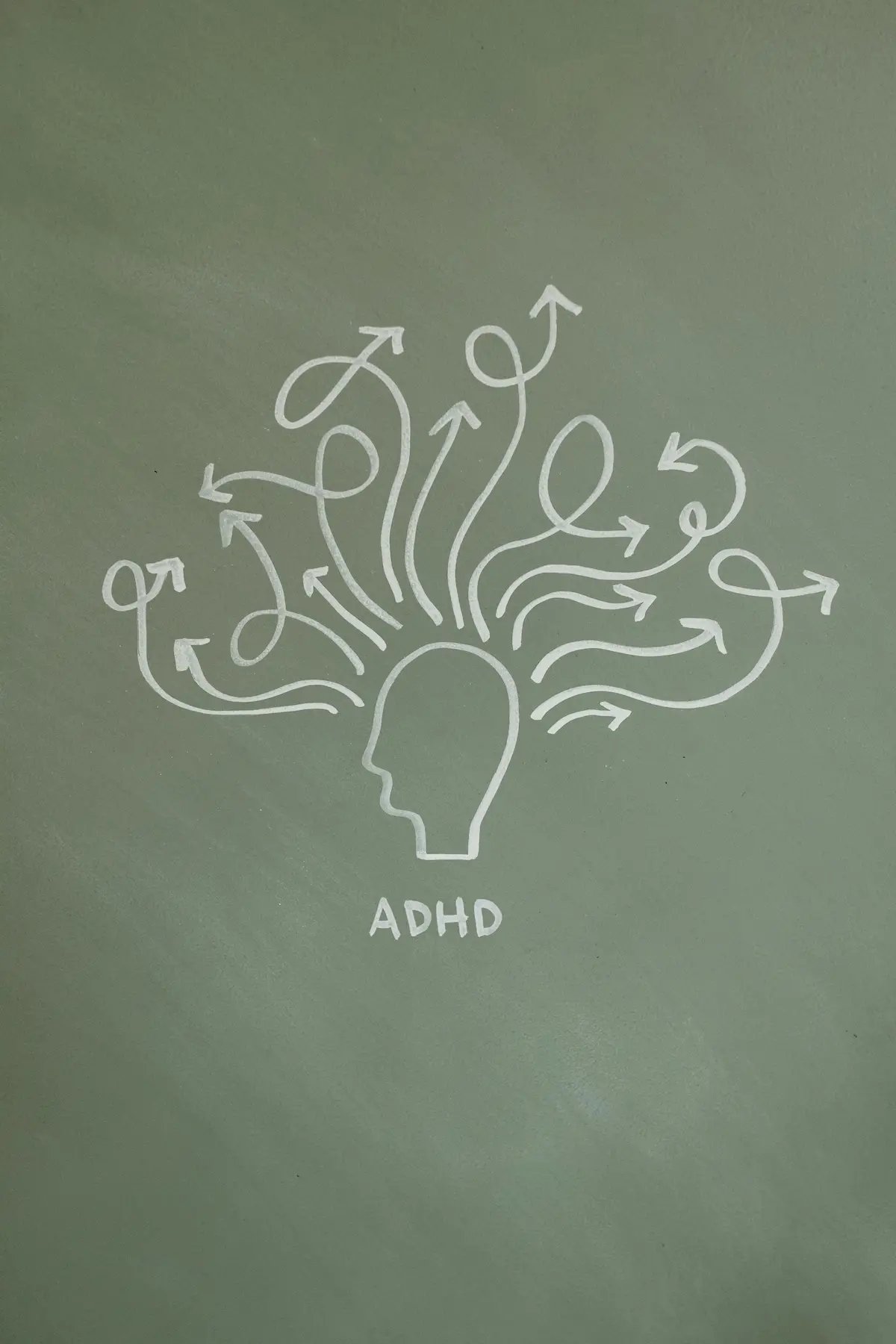
Decluttering asks your brain to do several things simultaneously: make decisions, sustain attention, manage time, regulate emotions, and tolerate discomfort. For ADHD brains, each of those is a known challenge. Put them all together, and you have a recipe for paralysis.
Decision Fatigue Hits Harder
Every item requires a decision: keep, donate, bin. That sounds simple until you're holding something expensive, or a gift, or might be useful one day. ADHD brains don't process decisions quickly and efficiently; they cycle, loop, and catastrophise. Forty-five minutes on one small drawer is not unusual.
Out of Sight, Out of Mind - Literally
Object permanence difficulties mean that if you can't see something, it effectively doesn't exist to the ADHD brain. This is why 'just put it in a box and store it' never works. The box goes in the cupboard, and poof, just like magic, the item is gone from your mental inventory, until you buy a second one and discover the original a year later.
Time Blindness
You sit down to sort one drawer, but three hours later, you're still working on that drawer. However, you've also reorganised your childhood photo collection, found a receipt from 2019 and undertaken a million other side quests. This is time blindness combined with hyperfocus, and it's exhausting.
Emotional Dysregulation
Objects carry memories and meaning for most people. For ADHD brains, the emotional weight is often amplified, and so letting go of something can feel disproportionately painful, not because you're being dramatic, but because your emotional processing works at a different intensity.
Shame Spirals
Most people with ADHD have years of accumulated messages and negative emotions that they're lazy, disorganised, or incapable, and decluttering can trigger all those emotions. You open the wardrobe, you see the chaos, and before you've touched a single item, you're already telling yourself a story about what kind of person this makes you, that you are a failure, or worthless.
It doesn't make you any of these, but it does make you someone whose brain works differently and who has never been given the right support.
Why Conventional Decluttering Advice Fails ADHD Brains
The KonMari method. The one-in-one-out rule. 'Does it spark joy?' Declutter a little every day. These approaches assume consistent motivation, sustained decision-making capacity, and a brain that can hold a vision of the end goal, but for ADHD brains, that's a lot to ask, especially when there's a big mountain of bags for the charity shop by your front door, and they are closed until Monday.
Conventional advice also creates unrealistic aesthetics. Pinterest-perfect pantries with matching containers and labelled everything look lovely but don't survive first contact with ADHD reality. Within a week, the lids are off, nothing is in the right container, and what do you do with the overflow of the bag of pasta that didn't fit in the jar?
What Actually Works for ADHD Brains
Visible Storage
If you can see it, you'll use it. Open shelving, clear boxes, hooks instead of drawers. The goal isn't to hide things; it's to keep them in your eyeline and therefore in your awareness.
One-Step Systems
The more steps involved in putting something away, the less likely it is to happen. A drawer that needs opening, a lid that needs removing, or an item that needs sorting by colour- that's four steps too many. One-step solutions: the item goes directly into the visible, open bin. Less friction = positive outcomes.
Working in Short, Timed Bursts
A timer is your friend. Twenty minutes on, five minutes off. Or forty-five minutes on, with a clear stopping point. Time-boxing limits the hyperfocus rabbit hole and makes the task feel finite rather than endless.
Starting With The Easy Wins
Momentum matters. Beginning with something small and simple, such as expired medication, obvious rubbish, or items that are clearly broken, this is what gets the brain into decision-making mode without triggering the emotional weight of harder items, and each small win gives you a dopamine rush that builds momentum. Save the sentimental stuff for last, or a different session entirely.
Forgiving Systems
Systems that assume perfection are not systems for ADHD brains. The best organising systems are the ones that survive chaos, and that still function when things get thrown in roughly rather than placed precisely. You need to build in margin for imperfection from the start.
External Support
Body doubling is a well-established ADHD strategy: having another person present while you work, even if they're just quietly sitting nearby, significantly increases the likelihood of task completion. A Professional Organiser does this and also takes on the decision-making burden, which is the part that's most exhausting for ADHD brains.
A Note on Shame
The state of your home is not a measure of your worth. If you have ADHD and you're managing work, family, health, relationships, and everything else life involves, the fact that your spare room has become a dumping ground is not evidence of personal failure. It's evidence that you're human and that your brain needs different support than most conventional advice provides. Life is hard, life is messy, and so we all need a break sometimes. Practising self-compassion is one of the best things you can do.
I work with ADHD clients across London and the Home Counties, providing a neurodivergent-friendly approach to decluttering and organising. Sessions are paced to your energy, structured to minimise decision fatigue, and conducted without judgement. I'm ADHD myself, and so I understand why this is hard, because I've lived it.
Related Articles
You Might Also Find This Useful
→ ADHD Organising Systems: Why Generic Methods Fail and What Actually Works
→ Perimenopause and Clutter: Why Your Home Feels Out of Control (And What Helps)
→ What Is Decision Fatigue in Decluttering, and Why It Makes Starting So Hard
→ The Secret to Staying Organised After a Declutter
If you're ready to get support that actually works for your brain, book a free discovery call.
Order from Chaos
Direct Approach. Bespoke Solutions.
© 2026. All rights reserved.








Based in Croydon, serving London, the Home Counties, and South East England, with virtual services available worldwide. See Areas I Cover
Blog
APDO Member / Enhanced DBS / Fully Insured / ICO Registered: ZB705394
Registered Address: 71-75 Shelton Street, WC2H 9JQ Company Number: 14974139
Order from Chaos is founded by Jo de Serrano OBE DUniv, APDO member, Enhanced DBS cleared, and fully insured. Late-diagnosed AuDHD with 25+ years of professional experience bringing structured, practical thinking to the chaos of everyday home life

