Neurodivergent-friendly is not a label. It is a set of specific practices that change how a session runs.
We Work at Your Pace
Energy fluctuates. Some days decision-making feels manageable; other days it is not possible, and that is not weakness, it is biology. Sessions are adapted to your capacity on the day. If a session needs to slow down, it slows down. If a category is causing a shutdown, I move to something lower-stakes and come back. There is no fixed script.
We Keep Decision Fatigue in Mind
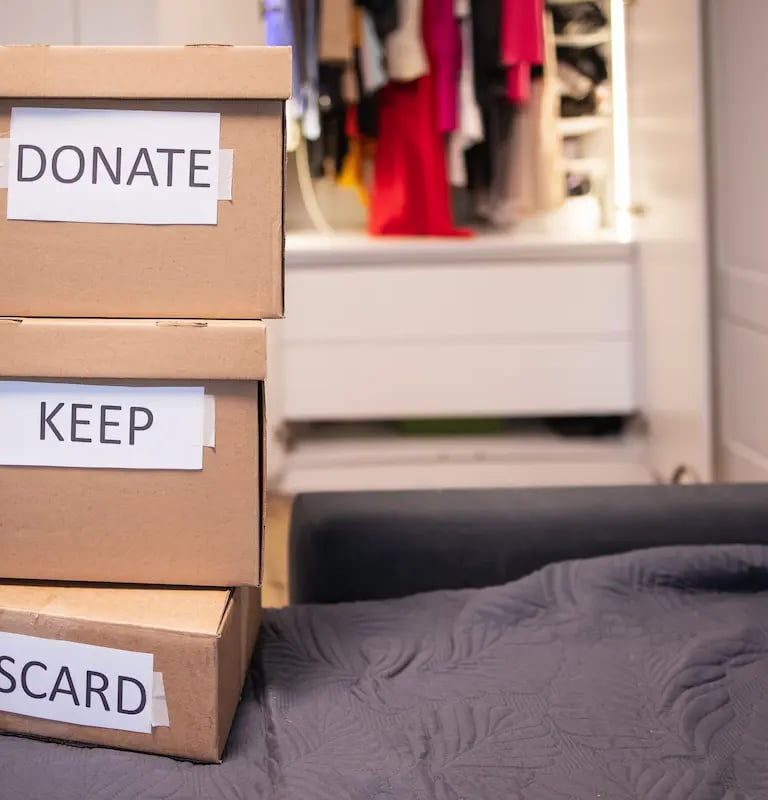
Every item doesn't need a philosophical discussion. The aim is to make decisions as simple as possible. Keep? Donate? Bin? and to batch similar decisions so your brain isn't switching context constantly. I stop before burnout, not after it.
We Respect Your Sensory Needs
If certain textures are distressing to handle, I work around that. If the visual chaos of everything being out at once is overwhelming, I work in smaller sections. If fluorescent lighting, strong smells, or background noise affect your capacity, that gets factored in before the session starts. Sensory needs are not an afterthought, they shape the structure of the session from the beginning.
We Remove Shame
No explaining why you "let it get this bad". No assumptions about your capabilities. No judgement about what your home looks like or how it got there. Just calm, practical support from someone who understands these patterns from the inside as well as the outside.
Decluttering & Organising
You don't need more advice. You need support that works with your brain.
You're Not Broken, the Systems Are
Most organising advice assumes your brain works a certain way: that you can maintain routines consistently, that decision-making is manageable, and that "just tidy as you go" is a viable strategy. For neurodivergent people, that advice can feel like being told to "just try harder", when the issue isn't effort. I work in London and the South East with neurodivergent people to declutter and implement sustainable solutions to keep them organised.
If you're autistic, ADHD, AuDHD, managing burnout, chronic illness, or simply know your brain works differently, you need support that gets it. Not support that politely accommodates you whilst still designing for someone else.
What Does Neurodivergent-Friendly Actually Mean?
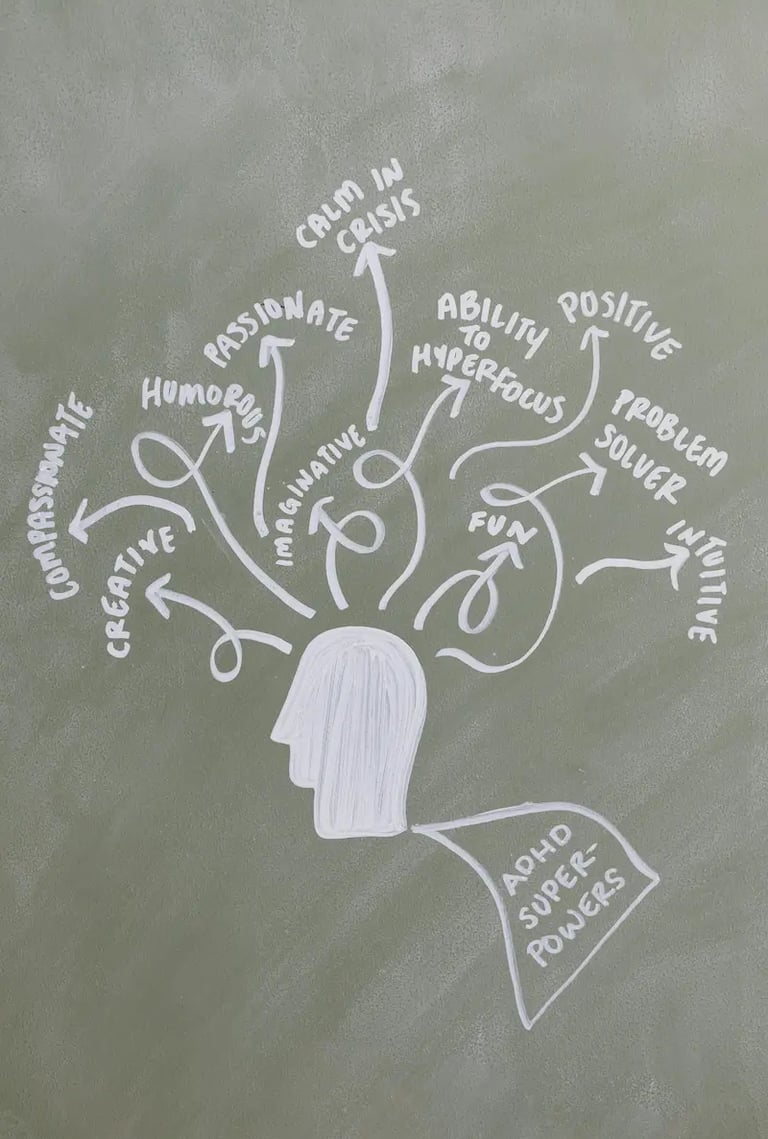
Neurodivergent-friendly sessions across London and the South East, led by a late-diagnosed AuDHD Professional Organiser. Individual sessions from £45 an hour.
Neurodivergent-Friendly
Autism Specific Support
Autistic clients often experience decluttering differently from the way it is typically described, and the standard Professional Organiser approach, which assumes high tolerance for disruption and quick decision-making, can be actively counterproductive.
Masking and the Energy Cost of Sessions
Many autistic adults spend significant energy masking in daily life. A decluttering session should not be another performance. The aim is to create a space where you can work without managing how you appear, which means less small talk, a clear structure from the start, and no expectation that you will be sociable as well as productive.
Routine Disruption
Having someone in your home, moving things around, and making decisions about familiar objects can be disorienting even when it is wanted. I manage this by working in clearly defined zones, returning to a consistent rhythm, and never moving anything without narrating what is happening and why.
Demand Avoidance and PDA Profiles
For clients with a PDA (Pathological Demand Avoidance) profile, the standard approach of working through a list of tasks can trigger avoidance regardless of motivation. Sessions for PDA clients are structured differently, led by the client's interest and energy rather than a predetermined plan, with choices offered rather than tasks assigned. The goal is the same; the route is more flexible.
Sensory Environment and Object Relationships
Some autistic clients have strong sensory relationships with objects, specific textures, materials, or items that provide regulation. These are not clutter to be cleared. The session works around and with these, rather than treating all objects as equal candidates for removal.
AuDHD: When ADHD and Autism Combine
AuDHD is the combination of autism and ADHD and it presents its own particular set of challenges. The impulsivity and novelty-seeking of ADHD can conflict directly with the autistic need for routine and predictability. This can result in a cycle of enthusiastic starts, sensory or cognitive overwhelm, and incomplete projects that leave the home in a state of permanent transition.
Sessions for AuDHD clients are structured to account for both profiles simultaneously, providing enough structure to prevent overwhelm, whilst remaining flexible enough to follow energy rather than fight it. The systems created afterwards tend to prioritise visibility (for the ADHD side) and consistency (for the autistic side), usually through clear zones, open storage, and minimal hidden systems.
Chronic Illness, Burnout, and Fluctuating Capacity
Executive dysfunction is not exclusive to ADHD and autism. It is also a feature of chronic illness, long-term burnout, fibromyalgia, ME/CFS, EDS, and a range of other conditions that affect energy, pain levels, and cognitive capacity day to day.
If your capacity is unpredictable, if you have high-energy days and crash days, or if pain affects your ability to make decisions, the session structure accounts for this. I do not plan a session assuming you will have full capacity throughout. I plan it assuming you might not, and build in the flexibility to work with whatever is available on the day.
The systems created afterwards are designed specifically for low-energy maintenance. A system that requires sustained effort to use is not a system; it is another source of pressure.
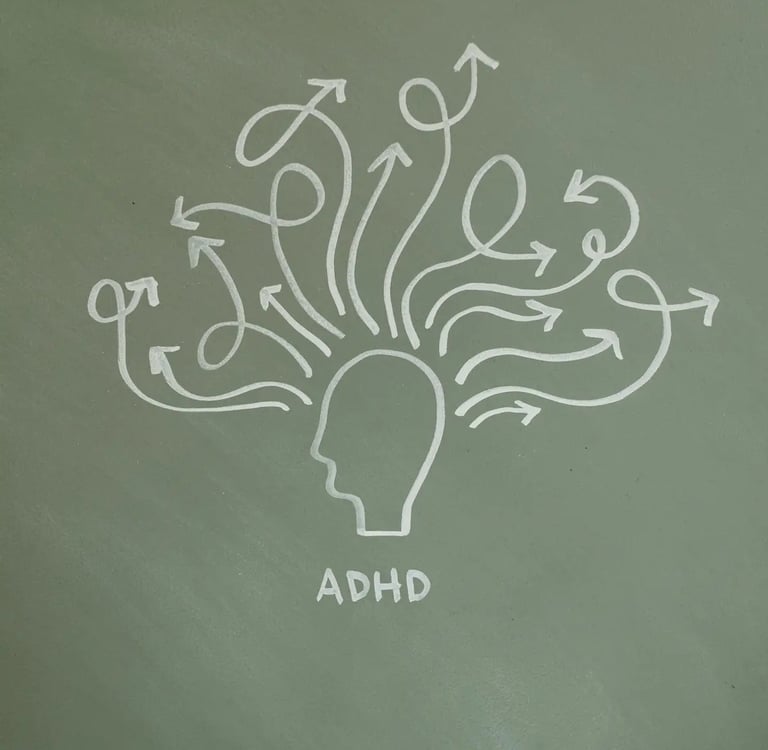


This is for you if...
You're autistic, ADHD, AuDHD, or otherwise neurodivergent
You're managing burnout, chronic illness, or fluctuating capacity
You've tried organising systems that didn't stick
You're tired of advice that assumes a neurotypical brain
You want support that works with your brain, not against it
You find decision-making exhausting and need someone to hold the structure
You have sensory needs that make standard organising approaches unworkable
What Neurodivergent Challenges Can I Help With?
Task initiation: You know what needs doing but can't start
Decision paralysis: Every choice feels enormous
Out of sight, out of mind: Hidden storage doesn't work for your brain
Change resistance: New systems feel overwhelming to implement
Sensory overwhelm: Visual clutter drains your energy before you begin
Perfectionism paralysis: If it can't be perfect, why start?
Burnout cycles: Intense effort followed by complete collapse
Shame spirals: The longer it goes on, the harder it gets to address
Demand avoidance: Tasks that feel imposed create resistance regardless of motivation
How Do Sessions Work?
You choose either a 4-hour or 7-hour session at £45 per hour. Sessions are adapted to your capacity and sensory needs on the day.
In each session:
We stop before burnout, not after it
We agree on realistic outcomes before we start (nothing overwhelming)
Decisions are kept as simple as possible to reduce cognitive load
Progress is celebrated, including the small wins
We respect your pace and sensory needs throughout
We create systems that match your brain, not neurotypical aspirations
No shame. No pressure. No pretending to be neurotypical.
Virtual decluttering sessions are also available if having someone in your home feels like too much, or if you prefer to work with support from your own environment without another person physically present.


Decluttering v Organising and Why You Usually Need Both
Decluttering is reducing what's in the way. Organising is creating easy systems for what stays.
Most clients need a blend: we clear the bottlenecks, then set up simple systems you can maintain without constant effort.



About Jo
Jo de Serrano OBE DUniv is a late-diagnosed AuDHD Professional Organiser who spent 25 years coordinating complex operations in humanitarian crisis management before founding Order from Chaos. She is a member of APDO opens in new tab], holds an Enhanced DBS certificate, and is fully insured.
The AuDHD diagnosis is not a marketing point, it means the patterns that make organising hard for neurodivergent clients are understood from direct personal experience, not just professional training.


The Takeaway


One of the hardest things for neurodivergent people is working out how to get things they have decluttered out of the house. So, I will take up to 5 x standard-sized rubbish bags with me and / or arrange for collection. One less thing for you to think about.
Frequently Asked Questions
What does neurodivergent-friendly organising mean in practice?
It means sessions are structured around how your brain actually functions, including sensory needs, executive dysfunction, demand avoidance, and fluctuating capacity. Nothing is assumed. Everything is adapted.
Is Jo neurodivergent herself?
Yes. Jo de Serrano OBE DUniv is late-diagnosed AuDHD. She understands executive dysfunction, sensory sensitivities, masking, overwhelm, and shame spirals from direct personal experience.
What conditions do you have experience with?
Order from Chaos works with clients with ADHD, autism, AuDHD, PDA profiles, dyspraxia, executive dysfunction, anxiety, burnout, ME/CFS, EDS, fibromyalgia, and perimenopause-related cognitive symptoms. Sessions are adapted to the individual.
Will you pressure me to throw things away?
No. Every decision about what to keep or let go is yours. Sessions are led by your priorities and your pace. The role is to provide structure and calm, not pressure or judgement.
What if I have a crash day on the session day?
We work with what is available. Sessions can be slowed, restructured, or refocused on lower-demand tasks if capacity is lower than expected. The session does not fail because your energy does.
Do you work with children or young people?
Sessions are with adults. If you are organising a family home that includes neurodivergent children, the systems created will take their needs into account, but the session itself is with the adult client."
— Lara, Walthamstow
Ready to Try Organising That Works For Your Brain?
Book a free discovery call, and we'll talk through what's not working, what you want instead, and the quickest route forward.
📅 Book: Discovery Call
📞 WhatsApp/Call: 07769 065404
✉️ Email: hello@order-from-chaos.co.uk
Related Articles
→ Why ADHD Brains Struggle with Decluttering, and What Actually Helps
→ ADHD Organising Systems: Why Generic Methods Fail and What Actually Works
→ Perimenopause and Clutter: Why Your Home Feels Out of Control (And What Helps)
→ What Is Decision Fatigue in Decluttering, and Why It Makes Starting So Hard
Page Last Updated: 14th September 2026
Contact Me, book a Discovery Call or check out my Services
Order from Chaos
Direct Approach. Bespoke Solutions.
© 2026. All rights reserved.





Based in Croydon, serving London, the Home Counties, and South East England, with virtual services available worldwide. See Areas I Cover
Blog
APDO Member / Enhanced DBS / Fully Insured / ICO Registered: ZB705394
Registered Address: 71-75 Shelton Street, WC2H 9JQ Company Number: 14974139
Order from Chaos is founded by Jo de Serrano OBE DUniv, APDO member, Enhanced DBS cleared, and fully insured. Late-diagnosed AuDHD with 25+ years of professional experience bringing structured, practical thinking to the chaos of everyday home life

